
Make catheterisation urethra-injury free.
amSafeX is a urethra-safe indwelling catheter designed as a drop-in Foley replacement with a patented obturator and pull-ring mechanism to confirm placement before drainage and balloon inflation.
CDSCO approved India Patent 587173 0/125 injuries
The regular Foley design flaw
A low-cost, unchanged catheter design can create a lifelong hospital-acquired injury when balloon inflation happens in the urethra.
90+ years unchanged
The current Foley balloon-catheter design has remained fundamentally unchanged for decades.
6.7-13.4 / 1,000
Published data cited in the uploaded amSafeX deck shows iatrogenic urethral-injury rates in this range.
Root-cause engineering
amSafeX blocks the drainage eye with an obturator until placement is verified and the clinician releases the pull ring.

A confirmation mechanism before drainage and balloon inflation.
Conventional Foley catheters can begin urine drainage even when the balloon is not yet safely inside the bladder. If the balloon is inflated while still in the urethra, it can cause acute rupture, pain, bleeding, stricture, recurrent infections, chronic pain and reconstructive surgery needs.
amSafeX eliminates this failure mode by using a patented obturator-and-thread mechanism: the drainage eye remains blocked until placement is verified and the obturator is pulled out.
REGULAR FOLEY VS amSafeX
Same clinical workflow. Safer placement logic.
No confirmation before balloon inflation
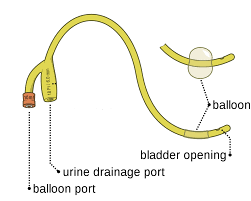
- Urine drainage can start irrespective of balloon position.
- No built-in feedback mechanism to confirm the balloon is inside the bladder.
- If the balloon is inflated in the urethra, acute urethral rupture can occur.
- Published injury range cited in the deck: 6.7-13.4 injuries per 1,000 catheterisations.
Drainage opens only after verified placement
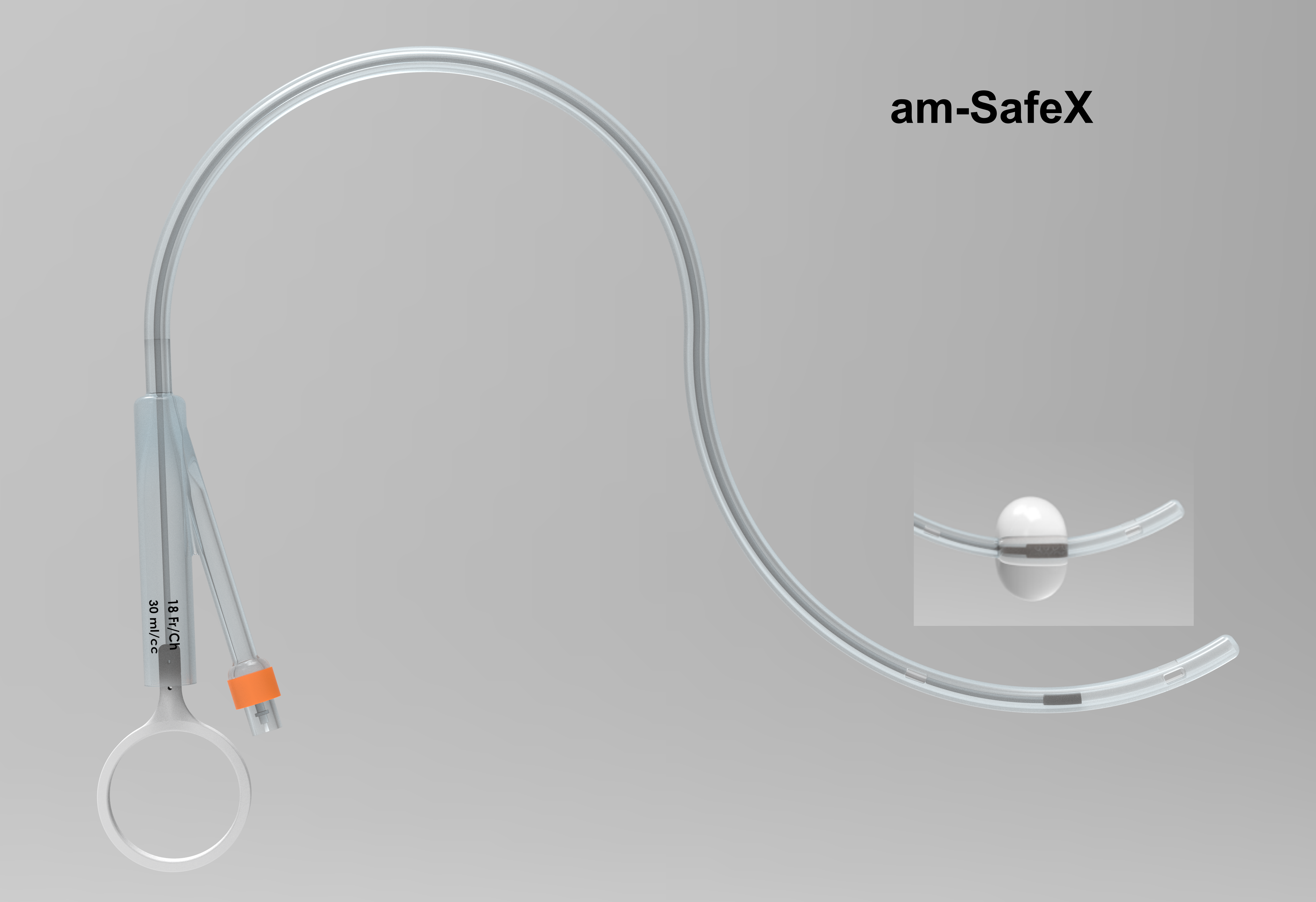
- Patented obturator blocks Eye 1 until balloon placement is verified.
- Pulling ring opens drainage only after placement confirmation.
- Drop-in replacement with the same insertion technique and no retraining.
- Clinical study cited in the deck: zero injuries in 125 patients.
Regular Foley vs amSafeX
Same clinical workflow, safer confirmation step.
| Parameter | Regular Foley catheter | amSafeX catheter |
|---|---|---|
| Balloon placement confirmation | No confirmation mechanism | Drainage opens after placement verification |
| Drainage before placement | Can drain irrespective of balloon position | Obturator blocks Eye 1 until released |
| Failure mode | Balloon may be inflated in urethra | Engineered to remove this failure mode |
| Clinical evidence | Known injury rates reported in literature | 0 injuries in 125-patient study |
| Training | Standard insertion | Drop-in replacement, same insertion technique |
| Regulatory status | Commodity category | CDSCO approved and selling in India |
Product information
- Built-in safety marker and patented obturator mechanism.
- Drainage opens only after placement is verified.
- Same insertion technique; no retraining required.
- Latex and 100% silicone variants; 2-way / 3-way; all French sizes.
- 100% QC pull-force tested: 260±20 g.
Patent status
India Patent: 587173 granted.
US status: US patent filed, as presented in the deck.
Protection focus: obturator-based urethra-safe catheter design and placement-verification workflow.
Clinical evidence
Published evidence: Urology Video Journal / Elsevier, 2025.
Study outcome: 0 injuries in 125 patients reported in the investor deck and evidence brief.
Study window: January-October 2022; prospective non-randomized interventional study.
Clinical evidence space
Add hospital letters, KOL testimonials, expanded registry data, regulatory submissions, post-market surveillance summaries or downloadable PDFs here.
Patent & clinical evidence
Publicly visible support for hospital, distributor and clinician audiences.
Patents and approvals
India Patent 587173 granted. CDSCO approved and commercial in India. US patent status should be shown separately from amSmart patent claims.
Clinical evidence
Published evidence: 0 urethral injuries in 125 patients, Urology Video Journal 27 (2025).
Evidence attachments / spaces: peer-reviewed article, hospital study summary, surgeon testimonial, multicentre study updates.